How do you find the right Pilates class type and instructor online?
Reformer or mat, foundations or advanced, prenatal or general. How to read a studio's timetable and filters so you book the class you actually want.

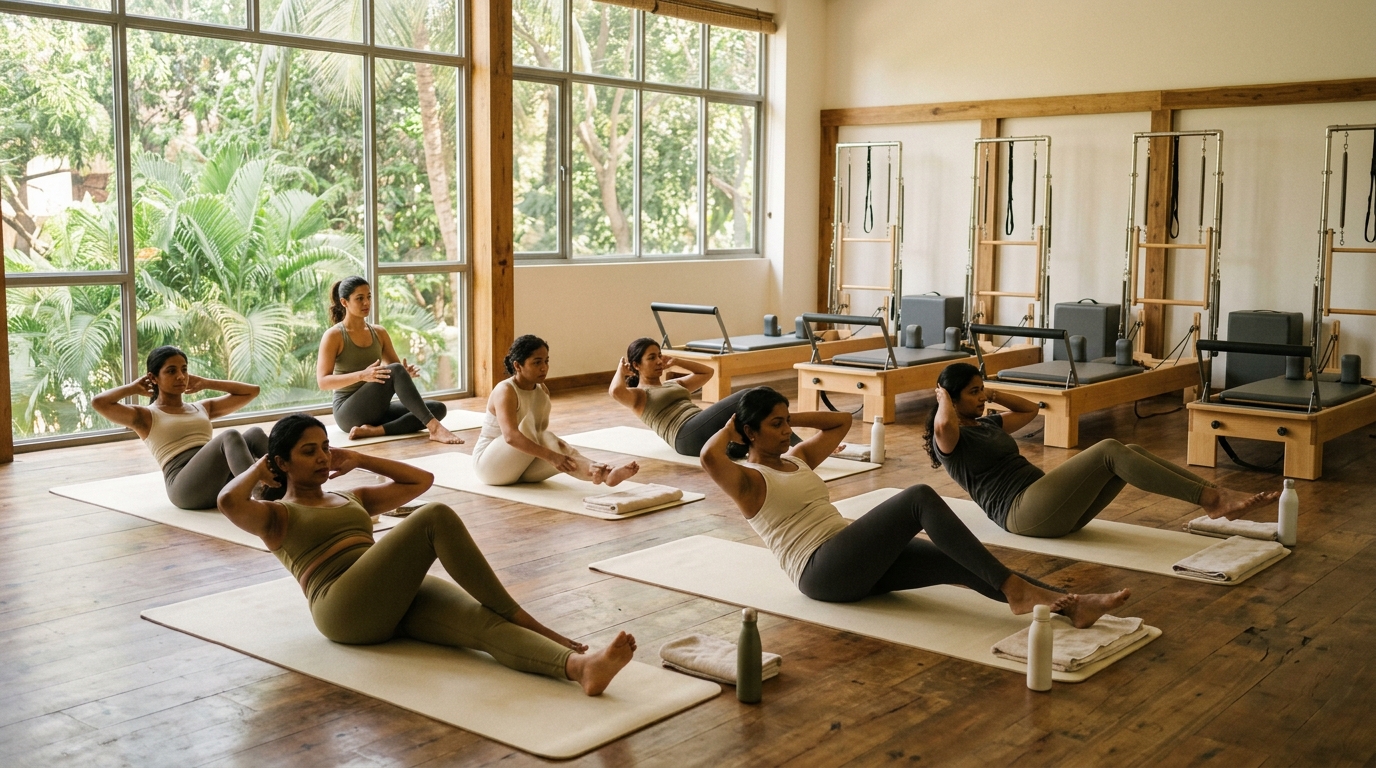
Start with the studio's online timetable and narrow it down in three steps: the class type (reformer, mat or another apparatus), then the level, then the instructor. Many booking apps show all three on each class and let you filter the timetable by discipline. Read the class description before you book. If you're pregnant or managing an injury, ask your doctor or physiotherapist first, then ask the studio which class and instructor suit you.
The main Pilates class types
Studios name classes their own way, so "Reformer Flow" at one studio might be "Reformer Intermediate" at another. Underneath the names, most classes fall into a few types.
| Type | What it is | Good to know |
|---|---|---|
| Mat | Exercises on a mat using your body weight and small props such as a ring, ball or band | Bigger classes and lower prices, and a good way to learn the basics |
| Reformer | A sliding carriage on springs, with straps and a footbar, that adds resistance or support | Each machine is a place, so classes are small and the popular slots fill first |
| Tower or wall unit | Springs and bars on an upright frame, fixed to the wall or to a reformer | Often part of small-group or mixed-apparatus classes |
| Chair and Cadillac | A compact sprung chair, and a raised table with an overhead frame (often called a trapeze table) | Usually taught one-to-one or in very small groups |
Mat classes usually cost less. Our research on Pilates and yoga class prices in India, checked on 24 September 2026, found mat Pilates drop-ins from ₹500 to ₹1,200, with a median of ₹999, against a median reformer drop-in of ₹1,649. Many members mix the two: reformer for the spring resistance, mat for control they can practise at home.
Class levels
The level matters more than the class name. A foundations class (some studios say beginner or intro) teaches the set-up: how to adjust the machine, change springs safely, breathe and find a neutral spine. It moves more slowly, and the instructor explains more.
Intermediate classes assume you know the set-up, so transitions are quicker and cues are shorter. Advanced classes add harder exercises and more load, and some studios only let you book them once an instructor has seen you in class. "All levels" or "open" classes give options for each exercise; they suit a confident beginner, though a full one can feel quick.
If you're new to the reformer, book a few foundations classes or a private session first, even if you're fit. Gym strength doesn't teach you how a spring-loaded carriage moves under you. Private sessions are booked differently from group classes, and our post on group and private Pilates booking explains how.
Instructors and their specialities
Many studios list their instructors on the website, and booking apps often show the instructor on each class. A good profile tells you where they trained, how long they've taught and what they focus on. Common specialities include prenatal and postnatal Pilates, classes for older adults, conditioning for athletes, and posture or back care.
Some instructors work alongside physiotherapists or describe their classes as rehab-focused. If you have an injury, a recent surgery or an ongoing condition, ask your doctor or physiotherapist first. An instructor can adapt exercises, but can't diagnose you or replace your treatment.
Then message the studio with specifics, for example "I'm 20 weeks pregnant and new to reformer" or "My physio has cleared me to exercise after knee surgery". A good studio will point you to a class and an instructor, or suggest a private session first.
Trying a few instructors is normal. Notice whose cues make sense to you, and book them again.
Filters and class descriptions
Many booking apps have a filter for discipline, which hides everything except reformer or mat, and some add level, instructor or branch. If the studio has more than one centre, check the branch first; booking the right class at the wrong centre is an easy mistake to make.
Open the class itself next. The description should give you the type, level and instructor, how long the class runs and how many spots are left. Look for anything to bring, such as grip socks, and check if the class is in the studio or online on Zoom.
Once you've found a handful of classes that suit you, book the same slots each week, because a routine is easier to keep. Our step-by-step on how to book a Pilates class online covers the booking itself, from the timetable to check-in.
If you run a studio
Many of these questions end up on your WhatsApp because the timetable doesn't answer them. Name classes so a newcomer can tell reformer from mat and foundations from intermediate, write a short description for each, and keep instructor profiles current. In StudioFly's class booking software, the member app shows each class with its type, level and instructor, members can filter the timetable by discipline, and if an instructor is out you can reassign the class and let booked members know.
Questions people ask
Which Pilates class should a beginner book first?
Book a foundations or beginner class in the type you want to do long term. If that's reformer, start with a reformer foundations class or a private session, so you learn the set-up and springs before a mixed-level class. Mat beginner classes cost less and teach the same principles. Read the description, as some studios ask you to complete foundations classes first.
How do I find a Pilates instructor who specialises in prenatal or injury work?
Look for prenatal or rehab-focused experience in the instructor profiles, but check with your doctor or physiotherapist first if you're pregnant, injured or recovering from surgery. Then message the studio with what your doctor or physio said, and ask which instructor and class suit you. Some studios will suggest a private session before you join a group.
What's the difference between reformer and mat Pilates?
Reformer Pilates uses a sprung machine with a sliding carriage, so the springs add resistance or support. Mat Pilates uses your body weight and small props on the floor. Reformer classes are smaller and cost more because each machine is a place; mat classes take more people. Both follow the same principles, and many members do both.
Can I filter a Pilates timetable by class type online?
Many booking apps let you filter a Pilates timetable by discipline, so you see only reformer or only mat classes, and some also filter by level, instructor or branch. If there's no filter, the class name and description should still show the type and level. When neither does, message the studio before you book.
What happens if my usual instructor isn't teaching the class I booked?
If your usual instructor is away, the class normally goes ahead with another instructor. Studios reassign classes when someone is ill or on leave, and many message everyone who's booked. Your booking stays as it is. If you'd rather not go, cancel within the cancellation window and you shouldn't lose a credit; if the change came late, ask the desk if they'll waive the late-cancel rule.