How do guest passes work at a Pilates studio?
Many studios don't sell a guest pass as such. Your friend usually comes on a trial or a drop-in and books their own spot, which keeps their details and the class list straight.

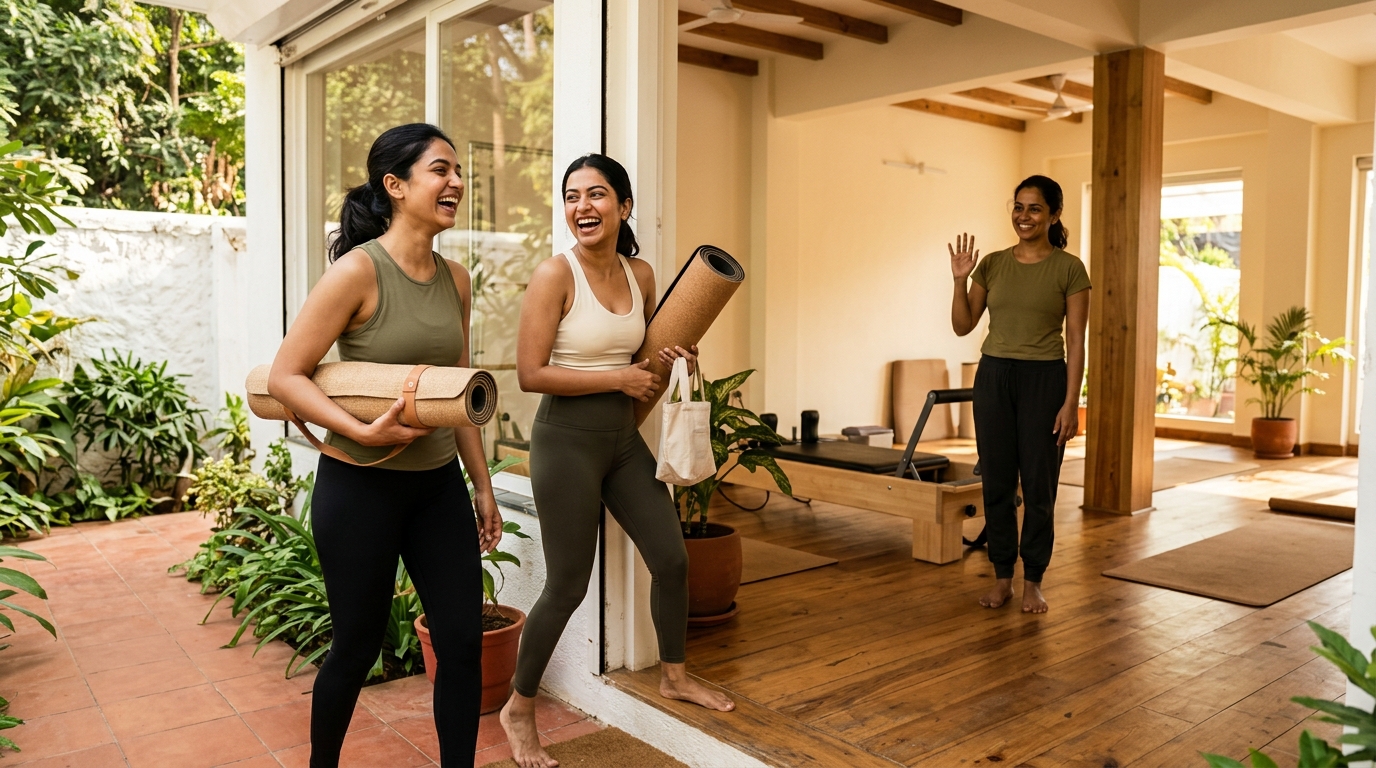
Many Pilates studios don't have a guest pass as such. Your friend usually comes as a trial client or pays for a drop-in, and books their own spot under their own name, so the studio has their details, health questions and signed waiver. Some studios also run bring-a-friend classes or include guest visits in certain memberships. Ask the front desk what they offer, then send your friend the booking link.
What a guest pass usually means
A guest pass lets a member bring someone to a class without that person buying a pack or a membership. Where studios offer one, it may come with certain memberships and be limited to particular classes or days.
Many studios simply treat your friend as a new client, with a trial class, a drop-in or a place in a bring-a-friend session. You still get a friend in the class with you, but the booking belongs to them.
If your membership does include guest visits, ask the desk three things: how many you get and when they reset (for example, one a month), which classes they cover, and whether your friend can still book a trial later. Some studios keep their busiest reformer slots for paying clients and welcome guests only in mat classes.
Why your friend books their own spot
It can feel simpler to book two spots on your own account. Many booking apps won't allow it, and the studios that do still need to know who the second person is.
Before a first class, a new client is usually asked about injuries, surgery and pregnancy, and signs the studio's waiver. Those answers have to come from your friend, and the instructor reads them to know who needs a gentler spring setting or an extra cue.
The studio also needs a way to reach your friend. If the class moves or the instructor is out sick, the studio messages the people booked. A friend booked under your name never gets that message, and turns up to a changed class.
And each spot on the class list is a person. At check-in the visit is recorded against a name, so your friend's visit shouldn't sit on your profile, and if they enjoy the class, the studio can talk to them directly about a beginners' pack.
The usual ways to bring a friend
Studios mix and match these four options.
| Option | What your friend pays | How they book |
|---|---|---|
| Trial class | Nothing at some studios; a trial price at others | The trial option on the studio's online booking page |
| Drop-in | The studio's single-class price | Book the class and pay for one session |
| Bring-a-friend class | Often free or reduced for guests | A special class on the timetable, or through the desk |
| Guest pass | Nothing, if your membership includes one | Usually through the front desk, with the friend's details |
For a sense of prices, our research on Pilates and yoga class prices in India, checked on 24 September 2026 across 42 studios in six cities, found 13 paid single-class trials, ranging from ₹49 to ₹1,500 with a median of ₹899. The median reformer drop-in was ₹1,649, and mat Pilates drop-ins ran from ₹500 to ₹1,200, with a median of ₹999.
A trial is usually the better deal for someone who has never been to the studio. Many studios allow one trial per person, so a friend who has visited before will normally pay a drop-in instead.
Booking a class together
Pick a class that suits a newcomer: a beginners' or foundations class, not your usual intermediate session. Check that it has at least two spots left before you invite your friend.
Book your own spot, then send your friend the studio's booking link, or the desk's WhatsApp number if they'd rather ask first. They choose the trial or drop-in for the same class and fill in their own details. If only one spot is left, let your friend take it and join the waitlist yourself, or pick another class together. For a friend who hasn't booked a class online before, our guide on how to book a Pilates class online walks them through it.
On the day, arrive 10 to 15 minutes early. First-timers need time for the studio's health questions, a quick look around, and a few minutes with the instructor on the springs and the footbar. Many studios ask for grip socks, so tell your friend in advance.
Good manners when you bring someone
Don't hold a spot for a friend who hasn't confirmed. If they drop out, cancel straight away, well before the cancellation window closes, so the spot goes to someone on the waitlist. A late cancellation or a no-show costs a credit at many studios, and at some it means your friend loses the trial.
Lending a friend your login or your pack causes problems too. Studios notice, and your friend ends up on a reformer without having answered the health questions everyone else does.
If your friend wants to keep coming, they can ask the desk about a starter pack. Our explainer on how class packs and credits work is a useful thing to send them.
If you run a studio
Decide what you offer members' friends (a free trial, a paid trial or a regular drop-in) and put it on your booking page, so members can share one link. Ask friends to book under their own name, so you have their contact details before they arrive and the instructor knows a newcomer is coming. In StudioFly, prospects book a free or paid trial class from your studio's online booking page, and your team follows up after the class. See self-serve booking for how members and new clients book without calling the desk.
Questions people ask
Can I bring a friend to my Pilates class?
Yes, you can bring a friend as long as there's a spot and they book it in their name. The studio will usually treat them as a new client, on a trial class or a drop-in. Some memberships include guest visits. Check with the front desk first, especially for reformer classes, where spots are limited to the machines in the room.
Can I book a second spot for my friend on my own account?
No, your friend should book their own spot. Booking apps usually tie one booking to one person, and the studio needs your friend's details, health questions and waiver. Send them the booking link instead. The exception is family: some studios let a parent book several family members into one class together.
Is my friend's first class free?
It's free only if the studio offers a free trial; otherwise your friend pays a trial price or the drop-in price. Across 42 studios in six Indian cities checked in September 2026, the 13 paid single-class trials we found ran from ₹49 to ₹1,500, with a median of ₹899. A friend who has visited before may not be eligible for a trial at all.
What should my friend bring to their first class?
Your friend should bring comfortable, fitted clothes, a water bottle and, at many studios, grip socks for the reformer. Arriving 10 to 15 minutes early gives them time to answer the studio's health questions and meet the instructor. If they have an injury or are pregnant, they need to check with their doctor or physiotherapist first and tell the instructor before class.